How Basketball Club Teams in San Diego Improve Player Confidence
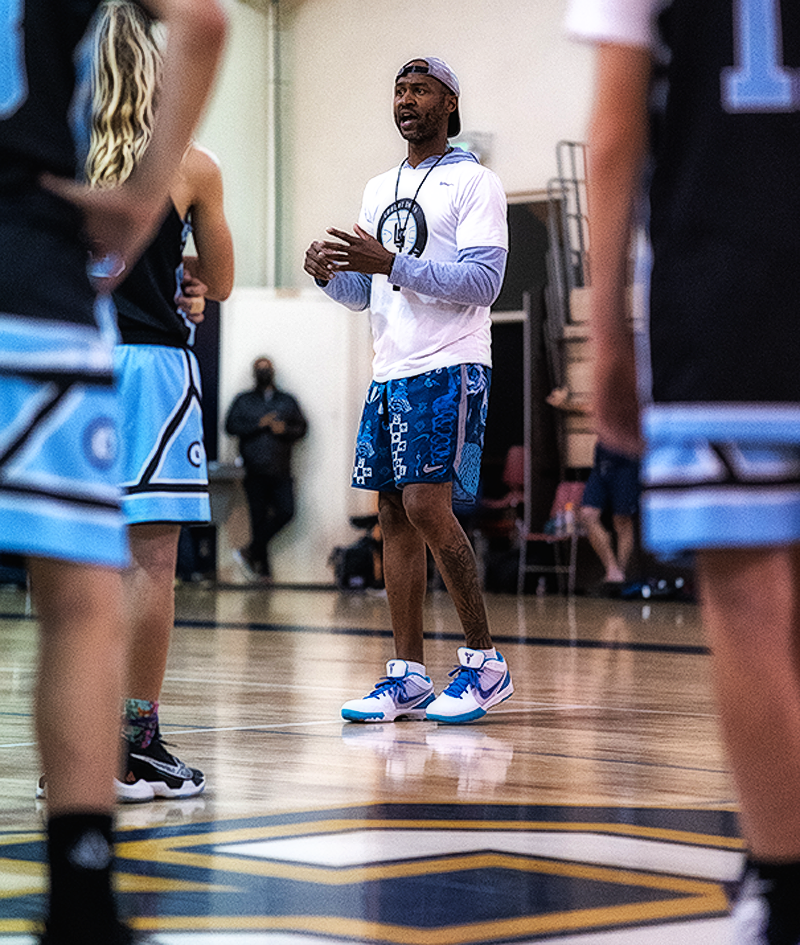
Confidence in basketball is easy to misunderstand. People often treat it like a personality trait, something a player either has or does not have. In a gym, it looks simple enough. One kid calls for the ball, attacks the rim, and plays with obvious belief. Another hesitates, overthinks, and passes up shots they make in practice. From the outside, one seems naturally confident and the other unsure.
That reading is usually incomplete.
Real confidence in youth basketball is built through repeated, specific experiences. It grows when players know what is expected, feel prepared for the moment, and see proof that their work translates into performance. That is one reason Basketball Club Teams San Diego families often talk about development in terms that go beyond shooting form or vertical leap. The right club environment can change how a young athlete carries themselves, speaks to teammates, responds to mistakes, and competes under pressure.
San Diego is a particularly interesting setting for this conversation. The area has a deep basketball culture, year-round training opportunities, and a wide range of competition levels. Players may move between school ball, private training, leagues, and club tournaments, sometimes all in the same year. That gives club teams an outsized role in shaping confidence because they provide one thing many players need most, consistent structure. When that structure is healthy, confidence tends to follow.
Confidence is built, not assigned
Most players do not need to be told to "be more confident." They need reasons to trust themselves.
A player starts trusting themselves when they can answer a few internal questions with clarity. Do I know what my job is? Have I practiced this situation enough times? Will my coach let me play through a mistake? Do my teammates believe I belong here? Young athletes may never say those questions out loud, but they carry them into every possession.
Strong club programs answer those questions every week.
A coach who teaches a guard how to read a ball screen, then gives that guard repeated chances to make the read in live play, is doing more for confidence than any pregame speech. A coach who tells a forward exactly where to relocate on penetration, then praises the right movement even when the shot misses, is connecting process to self-belief. Confidence becomes less emotional and more practical. The player is not hoping to feel ready. The player knows why they are ready.
That distinction matters. Temporary confidence often rises and falls with the last shot. Built confidence survives a cold quarter because it comes from preparation and role clarity.
Why the club setting matters more than many parents realize
School seasons are often short and compressed. A high school or middle school coach may have limited practice time and immediate pressure to win. That can make it harder to devote long stretches to confidence-building development, especially for players who are still figuring out their game.
Club basketball has more room to shape the athlete over time. A good program sees the player in multiple contexts, training sessions, tournament weekends, strength work, and off-season development blocks. That broader view allows coaches to identify patterns that a short school season might miss.
One player may look timid in games, but the real issue could be decision speed. Another may seem to lack confidence attacking the basket, but video might show the actual problem is poor footwork on the gather. A third may appear passive because they are afraid of making the wrong read in transition. Once those issues are identified and coached, confidence tends to rise quickly because the athlete is solving the problem underneath the hesitation.
This is where Basketball Club Teams San Diego can make a meaningful difference. In a region with frequent tournament exposure and strong local talent pools, athletes get repeated chances to apply what they learn. Repetition in meaningful environments is where confidence hardens.
The role of coaching language
Coaching language has a direct effect on confidence, especially with young players who are still forming their athletic identity.
Some coaches unintentionally create fear by correcting every mistake with the same intensity, regardless of context. When that happens, players begin to perform cautiously. They stop experimenting. They stop making assertive reads. They become more interested in avoiding criticism than making the right basketball play. On paper, it may look like discipline. In practice, it often produces hesitation.
Experienced club coaches usually know better. They separate errors into categories. A missed rotation due to poor effort gets treated differently than a missed rotation from a player learning a new coverage. A careless turnover is not the same as an aggressive play that failed for a teachable reason. Players notice those distinctions immediately.
When feedback is precise, confidence grows. Instead of hearing, "You have to play better," a player hears, "You made the right cut, but you drifted too deep. Stop one step earlier and your angle opens." That kind of correction does not shame the athlete. It equips them.
The best coaches also understand timing. Not every teaching point belongs in the heat of the moment. A player who just turned the ball over in a one-possession game may only need one sharp cue, chin up, next play. The detailed teaching can come later on film or at practice. Protecting a player's mental state in competition is part of confidence development.
Repetition under pressure changes everything
A lot of players look confident in workouts. Much fewer look confident in the final four minutes of a close game.
That gap matters because confidence is situational. A player may feel excellent during drills and still tighten up when defenders are longer, help comes earlier, and the gym gets louder. Club teams help bridge that gap by exposing players to game pressure more often than casual recreational settings usually can.
Tournament basketball is especially useful here. Over a weekend, players may deal with early morning starts, unfamiliar opponents, quick turnarounds, and games where every possession feels urgent. Those are valuable reps. A young point guard learns how to settle an offense after two bad possessions. A wing learns that one missed three does not mean they should stop shooting the open one in the corner next quarter. A post learns to absorb physical play without losing composure.
Confidence does not develop because pressure disappears. It develops because pressure becomes familiar.
This is one of the practical benefits families often see with Basketball Club Teams San Diego. The local and regional competition landscape gives players enough real-game exposure to stop treating every tough moment like a crisis. Over time, difficult moments become recognizable, then manageable.
Role clarity gives players room to breathe
Many confidence problems are actually role problems.
If a player does not know whether they are supposed to score, facilitate, defend the best perimeter threat, or simply space the floor and make quick decisions, they often end up doing none of those jobs with conviction. Ambiguity creates hesitation, and hesitation reads as low confidence.
The strongest club programs define roles clearly, while still allowing room for growth. That balance is important. A player should know their current role, but they should not feel trapped in it forever.
For example, a coach might tell a developing wing, "Right now, your biggest value is defending, running the floor, and knocking down the catch-and-shoot three. But we are also going to spend the spring expanding your off-the-dribble game." That message stabilizes the present while preserving ambition for the future.
Players need both. If all they hear is their current limitation, confidence shrinks. If all they hear is a vague promise about potential, confidence becomes detached from reality. The best coaching makes development feel concrete and sequential.
I have seen players transform simply because someone explained their job in plain language. A seventh grader who had spent months forcing bad drives became a reliable contributor once his coach told him, "You are not here to prove you can do everything. Win your matchup with defense, cut hard, and be ready to shoot." His body language changed within two weekends. He played freer because the game made sense again.
Skill development that actually transfers to games
Parents often invest in private workouts and extra reps, but confidence rises fastest when skill work matches game reality.
There is a difference between making one hundred unguarded shots and learning how to create, catch, and shoot on time against pressure. There is a difference between doing ball-handling moves in place and navigating a trap near half court while keeping your eyes up. Players feel that difference. They know when a workout has prepared them and when it has merely tired them out.
Good club teams connect practice design to likely game scenarios. They rehearse actions from the spots players will actually occupy. They drill footwork at realistic pace. They add decision-making, not just repetition. They create constraints that force players to process quickly.
When players start succeeding in situations they have already rehearsed, confidence rises almost automatically. There is less panic. Their attention shifts from self-doubt to execution.
This also prevents a common trap, false confidence based on controlled drills. Some athletes look polished in isolated settings and then unravel when defenders disrupt timing. Smart club coaches protect players from that mismatch by making training honest. Honest training may bruise the ego for a week or two, but it builds sturdier confidence over the long haul.
Teammates influence confidence more than most adults admit
Coaches matter, but peer dynamics matter too.
A team can either become a place where players feel judged for every mistake or a place where they feel pushed and supported. The difference shows up in subtle ways. Do teammates talk to each other after a turnover? Does the bench stay engaged when a reserve player checks in? Do older or more advanced players encourage younger ones, or do they freeze them out?
Club teams often bring together athletes from different schools and social circles, which can be healthy. It forces players to earn trust through habits rather than reputation. But it also means chemistry cannot https://elliotcugt339.wordcanopy.com/posts/how-basketball-club-teams-in-san-diego-strengthen-basketball-fundamentals be assumed. It has to be built.
The teams that improve confidence usually have standards around communication. They teach athletes how to talk during games and practices, how to hold each other accountable without turning every correction into criticism, and how to recognize effort and good decisions even when the result is imperfect.
That environment helps quieter players come forward. It also helps naturally vocal players learn leadership with control. Both outcomes matter. Confidence is not only about individual scoring aggression. It also includes calling out a coverage, asking for the assignment, huddling teammates after a rough stretch, or admitting confusion and seeking help.
Those are learned behaviors. A well-run club team teaches them.
Failure is part of the process, if the environment can handle it
Any honest discussion about confidence has to leave room for failure. Players do not become more confident because every weekend goes well. They become more confident because they learn how to interpret setbacks.
This is where some club experiences fall short. If every poor game causes panic, extra blame, or immediate role changes, athletes start performing from a defensive mindset. They become obsessed with avoiding the next bad stretch. Confidence weakens because the environment has no margin.
Healthy club programs still hold players accountable, but they do not overreact. They review film, identify patterns, and make specific adjustments. A rough tournament becomes information, not a verdict.
There is a major difference between telling a player, "You are not ready," and saying, "You struggled handling length this weekend, so we need stronger pickup points and earlier decisions." One attacks identity. The other attacks the problem.
That approach is especially important during growth spurts, position changes, and age-level jumps. A player who dominated at one level may suddenly look ordinary against bigger, faster competition. If coaches and parents misread that adjustment period, confidence can drop fast. If they frame it correctly, it becomes a bridge to the next stage of development.
Parents shape confidence from the sidelines and the car ride home
No article on player confidence is complete without acknowledging parents. Even the best team environment can be undermined by constant postgame analysis, anxious body language, or unrealistic expectations.
Most parents mean well. They want to help. But young athletes rarely benefit from hearing every mistake replayed the moment they leave the gym. After an emotional game, the player is usually not ready for a technical breakdown. What they need first is emotional steadiness.
Club teams that communicate well with families tend to support confidence more effectively because expectations are aligned. Parents understand roles, development priorities, and the normal ups and downs of the season. That reduces mixed messaging.
A useful rule for families is simple:
- Let the first conversation after games be short and calm.
- Praise traits the player controls, effort, communication, toughness, and response to adversity.
- Save detailed analysis for later, if the player actually wants it.
- Avoid comparing your child to teammates, opponents, or siblings.
- Trust the longer development arc more than one weekend's stat line.
When families follow that pattern, players usually become more resilient. They stop feeling as if every game is an evaluation of their worth. They can compete, reflect, and recover.
The San Diego factor
San Diego offers a basketball environment that can accelerate confidence when players are placed well. The region has enough variety that athletes can find both challenge and fit, which is crucial. A player who is never challenged may feel confident until stronger competition exposes shallow habits. A player who is always overwhelmed may lose confidence before their skills have time to catch up.
That is why placement matters so much. The right club team is not automatically the one with the biggest name or toughest schedule. It is the one where the player is stretched without being buried, coached without being diminished, and held accountable without being made fearful.
For some athletes, that means joining a roster where they can contribute immediately and grow into larger responsibility. For others, it means entering a higher-level environment where minutes are earned more slowly but daily standards rise. Both paths can build confidence if expectations are honest and support is strong.
Families looking at Basketball Club Teams San Diego should pay close attention to the small signals during tryouts and practices. Watch how coaches correct mistakes. Watch whether players on the fringe are engaged or ignored. Watch if the gym feels tense in a destructive way or demanding in a productive way. Confidence grows best in demanding environments that still leave room for learning.
What confidence looks like when it is real
Real confidence in a basketball player is rarely loud all the time. Sometimes it is visible in bold plays, but just as often it shows up in steadier habits.
A confident player runs back on defense after a turnover instead of collapsing into frustration. A confident shooter stays ready after two misses because the shot quality is still there. A confident defender asks for the toughest matchup without making a show of it. A confident bench player enters the game with clarity because they have been prepared for that role.
These are not glamorous details, but they are reliable markers of growth.
You can usually tell when a club team is improving confidence because the entire group becomes less reactive. They recover faster. They communicate better. They do not need constant emotional rescue from adults. Their preparation starts to show in how they handle imperfect moments.
That kind of confidence lasts longer than highlight-reel swagger. It tends to carry into school ball, academics, and other parts of life because it is built on competence, trust, and repeated proof.
The long-term payoff
When club basketball is done well, confidence becomes one of its most important outcomes. Not confidence as performance theater, but confidence as earned self-trust. That version stays with players.
A young athlete who learns to handle pressure, accept coaching, recover from mistakes, and contribute within a team gains something bigger than a better crossover or jumper. They begin to understand how growth actually works. Preparation leads to clarity. Clarity leads to assertiveness. Assertiveness, backed by skill, becomes confidence.
That is the real value many families are seeking, whether they say it that way or not. They are not only hoping their child scores more points or makes a better team next season. They want to see them walk into the gym with belief, compete without fear, and leave stronger than they arrived.
The best Basketball Club Teams San Diego help make that possible. They do it through structure, honest coaching, meaningful repetition, thoughtful competition, and environments where players are challenged with purpose. Confidence is not handed out there. It is built, rep by rep, possession by possession, until it starts to look like part of who the player has become.
Lamont Smith Basketball Academy
888 Clairemont Mesa Blvd Suite T-2, San Diego, CA 92123
(619) 639-8778
FAQ About Basketball Club Teams San Diego
How can a player join an LSBA club team?
Players are evaluated during practices so the coaching staff can recommend an appropriate team and development level. Families should contact the academy to confirm current openings and evaluation details.
Are club teams available for newer basketball players?
Yes. LSBA describes multiple levels, including a developmental option for newer players as well as more competitive teams for athletes with prior club experience.
What do LSBA club team practices emphasize?
Practices emphasize basketball fundamentals, team defense, structure, communication, and player development. The specific focus may vary according to the team and experience level.
Do all LSBA teams travel?
Travel expectations vary by level. Some teams focus on local competition, while advanced teams may participate in tournaments elsewhere in Southern California or beyond. Families should confirm the current schedule before enrolling.